Durable
The low visibility wire net is made of high strength mild steel wire that is durable enough to resist heavy impacts like tanks and other devices with tracks. A layer of grease is coated on the surface of wire obstacles to keep them serving longer even in harsh environments.
Portable
Anti tank meshes are produced in bounded circular modules. A 10m by 10m obstacle mesh can be compacted to a 1.1m by 0.55m size. The collapsible feature makes it easy to transport and store.
Low Visibility
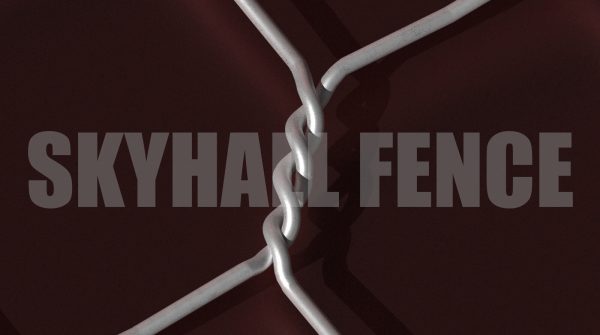
Four types of mild steel wires are used to weave different layers of the anti tank mesh. These thin wires come in different diameters, including 0.5mm, 0.6mm, 0.8mm, and 0.9mm. When the obstacle wire is expanded in a large field, it’s hard to see its existence. That’s why we call it a low visibility wire obstacle.
Multi-threat Protection
Inconspicuous obstacle wires can be used to stop tanks, armored personnel carriers (APCs), and wheeled vehicles. They can also be combined with mines, barbed wires, or anti-personnel measures for layered defense.
Key benefits of low visibility wire obstacles
- Rapid Deployment—Faster to install than concrete barriers or ditches.
- Cost-Effective—Cheaper than permanent fortifications but still highly effective.
- Disrupts Enemy Movement—Forces tanks to slow down, change routes, or become vulnerable to attacks.
- Works in Multiple Terrains—Effective in urban, desert, and muddy environments.
- Scalable Defense—Can be deployed in large grids to block entire columns of vehicles.
How to Install Low Visibility Wire Obstacle
You may install the obstacles in accordance with the following installation instructions and safety measures. Improper installation can reduce the effectiveness of the protection, so make sure you strictly follow our recommendations.
Step 1: Lay out the barrier in the place where it’s planned to be installed. Reminder: After deployment, the low visibility wire obstacle can not be assembled back and reinstalled in another place, so the location should be chosen carefully before it’s deployed.
Step 2: Stretch two rows of the barrier to the expanded length.
Step 3: Spread each row outward. Four rows will be obtained from two rows.
Step 4: Cut the transport collars that connect all the coils together.
Step 5: Unfold the bobbin. Each coil formed during the unfolding of the bobbin should be separated thoroughly for further effective loosening.
Step 6: Find the row with the thickest wire lengthwise and secure the bottom pair of coils with pegs. Tips: Insert the pegs at an angle towards you and drive them to the maximum depth until the entire base is in the ground.
Step 7: Loosen and stretch the obstacle.
- Grab the top two thin pairs from the first row of thin coils.
- Pull the top two pairs towards you, shaking the structure to loosen the wire obstacle until it is vertical.
- Walk 10 meters, shaking the obstacle lightly.
- After stretching, check whether the wire is sufficiently stretched to the required height and has covered the expected areas.
Step 8: Fix the rows on the other side with pegs. Make sure the thick coils are at the bottom while the thin ones are at the top.